A write-up by reporter Judith Ritchie for the Nelson Mail before – This Was Now Here! – exhibition opening. Unfortunately, there was a typo with my surname, a common mistake.

by JUDITH RITCHIE
Last updated 13:00, January 29 2015
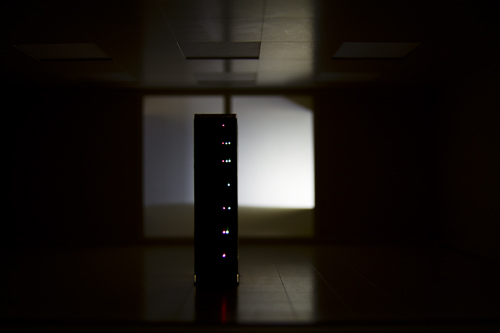
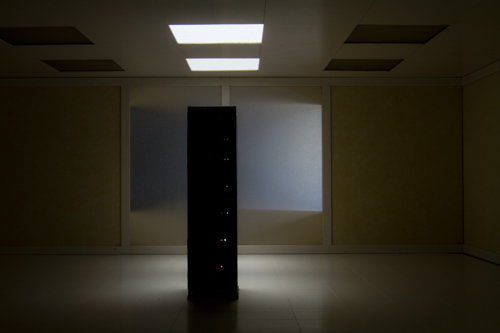
While exploring ideas around power and control, Jason McCormack enters unusual territory, creating realities which are in truth non-realities.
This Was Now Here! is an exhibition of eight large photographs, alongside a film of moving images. He has spent the last two years completing a Masters of Art & Design through AUT, under the supervision of Dieneke Jansen and Natalie Robertson.
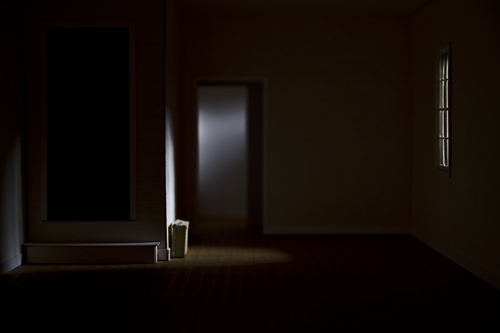
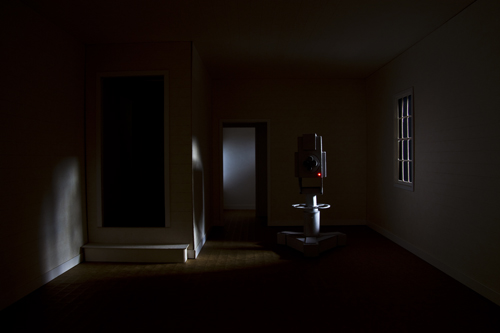
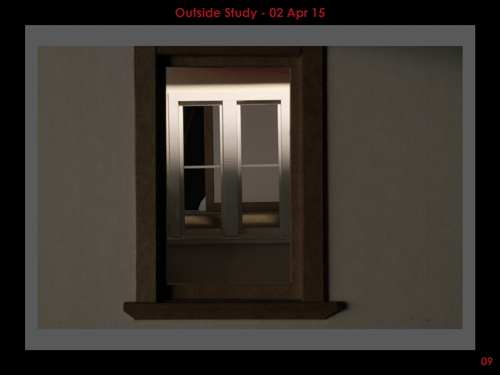
McCormack has constructed small architectural models of the interiors of old colonial buildings, architectural spaces of “implicit and hidden power” using a discipline called “constructive photography,” staged with lighting. He chose buildings from around Nelson, including Nelson cathedral, Bishops School and the Methodist Hall. He has also constructed the old Supreme Court building which was demolished in 1969, taking the measurements and details from old photographs.
“It’s a process of de-constructing the original buildings,” says McCormack. “They’re not to scale and I didn’t use all the features of the originals, I picked what I wanted to use. Often the construction materials, like the cardboard sheeting, are left obvious.”
McCormack started his degree as a painter, but has moved into photography and filmatic works to better convey his messages.
“One of the reasons I’ve moved from painting into photography was I felt it reflected the media that is part of the manipulation,” says McCormack.
He questions the notion of democracy and subtly plays with ideas around the power and control that corporations can have, taking over the minds and actions of governments and people.
“It questions if democracy is an illusion; an ideology rather than a reality,” says McCormack. “It explores hidden meanings within this architecture; the inherent metaphysical connotations imbued not only in the architecture, but also in the model and the image.”
McCormack’s moving images are created using stop-motion, still shots in slow motion, with sounds slowed down to match the images.
“The project investigates the merging of boundaries between what is real and unreal, creating an illusionary space that aims to establish the uncanny through the transformation of the familiar to the unfamiliar,” says McCormack. “This filmic exploration acknowledges the paradoxical nature of the project; that while investigating and critiquing manipulation, it is at the same time attempting to draw the viewer into a manipulated experience.”
– The Nelson Mail
http://www.stuff.co.nz/nelson-mail/news/65534263/exploring-reality-and-illusion